

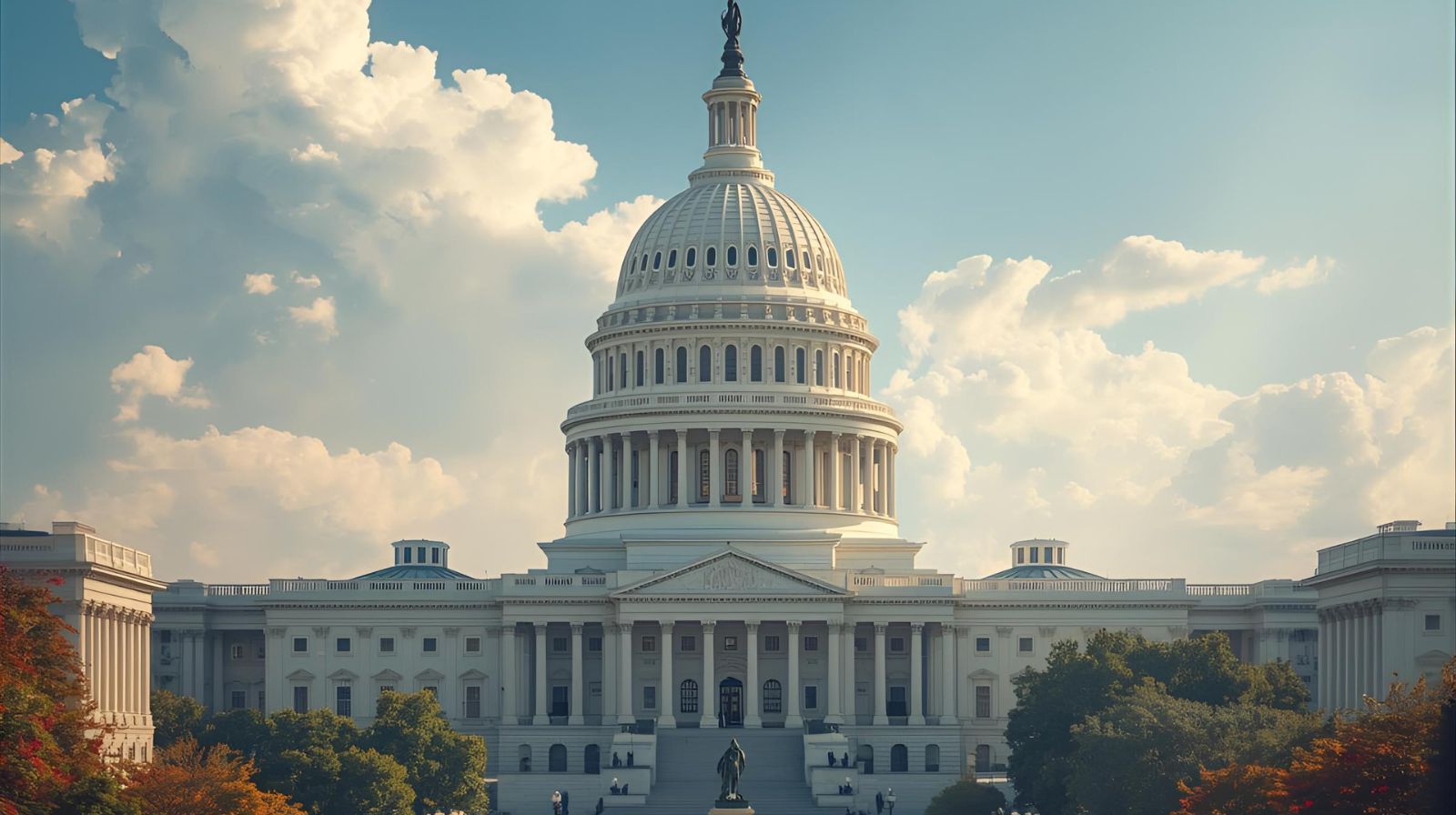
Executive Summary: With the March 14, 2025 funding deadline looming and federal layoffs already underway through DOGE, this shutdown carries unprecedented factors that could amplify traditional impacts. While historical shutdowns have minimally affected markets (average S&P 500 return of 0.1%), current federal workforce disruptions and policy uncertainty create new variables investors and citizens must navigate.
The Current Shutdown Landscape: What Makes 2025 Different
Unlike previous shutdowns driven solely by Congressional funding disputes, the March 2025 potential shutdown occurs amid the most dramatic federal workforce reduction in decades. Elon Musk’s Department of Government Efficiency (DOGE) has already eliminated 200,000-300,000 federal positions, with another 450,000 contractors at risk—creating a backdrop of unprecedented government disruption.
Current situation: Congress faces a March 14 deadline to pass appropriations for fiscal year 2025, with zero of the 12 required bills enacted. The House passed a six-month continuing resolution, but Senate approval remains uncertain amid broader disputes over Trump administration downsizing efforts.
The Perfect Storm: Layoffs Meet Shutdown Threats
This potential shutdown coincides with the largest federal workforce reduction since the 1990s. Early estimates suggest 77,000 employees have already accepted “deferred resignation” offers, while probationary workers across Energy, Education, Veterans Affairs, and other departments face immediate termination.
Key insight: Research shows furloughed federal employees are significantly more likely to quit permanently after shutdowns, with younger workers departing for private sector opportunities and experienced employees choosing early retirement. Combined with existing DOGE cuts, this could create a devastating brain drain in government operations.
Your Financial Exposure: Direct Impact Assessment
Federal Employee Financial Planning
If you’re a federal employee, your financial situation depends on your classification:
Essential Employees: You’ll work without pay but receive guaranteed back pay once the shutdown ends. Financial strategy: Maintain emergency funds to cover at least 4-6 weeks of expenses, as the 2018-2019 shutdown lasted 35 days.
Non-Essential Employees: You’ll be furloughed but still receive back pay under the 2019 Government Employee Fair Treatment Act. Financial strategy: Apply for unemployment benefits if available in your state and consider temporary work opportunities.
Already Laid Off (DOGE): If you’ve been terminated through DOGE cuts, you won’t receive back pay and aren’t eligible for furlough protections. Financial strategy: Prioritize active job searching and consider severance package optimization.
Contractor and Private Sector Ripple Effects
Government contractors face unique challenges during shutdowns:
- Payment delays for existing work, potentially lasting weeks beyond shutdown resolution
- Contract modification freezes halting new agreements
- Facility access restrictions preventing work completion
- No guaranteed back pay unlike federal employees
Financial protection strategies:
- Maintain larger cash reserves than typical (90+ days of operating expenses)
- Review contract terms for force majeure clauses
- Consider factoring receivables if cash flow becomes critical
- Document all shutdown-related delays for potential claims
Investment Portfolio Impact: Beyond Historical Patterns
Stock Market Response: Why This Time Could Be Different
Historical data shows government shutdowns have minimal market impact—the S&P 500 has averaged 0.1% returns during shutdowns, with positive returns in 12 of 21 instances since 1976. However, 2025 presents unique factors:
Traditional factors (historically minimal impact):
- Short-term uncertainty and volatility
- Delayed economic data releases affecting Fed decisions
- Consumer confidence fluctuations
New 2025 factors (potentially significant impact):
- Massive federal workforce reduction amplifying economic effects
- Debt ceiling approaching in summer 2025 with “extraordinary measures” already implemented
- Policy uncertainty around Tax Cuts and Jobs Act expiration
- AI and automation policy implications from tech-focused administration
Bond Market Considerations
Treasury securities typically remain stable during shutdowns, with interest payments continuing regardless of funding gaps. However, current conditions introduce new variables:
Credit rating risk: Fitch already downgraded U.S. debt in 2023 due to governance concerns. A prolonged shutdown amid federal workforce chaos could trigger additional downgrades, potentially increasing borrowing costs.
Yield curve implications: The 10-year Treasury yield has surged above 4.5% following Fed communications about fewer expected rate cuts. Shutdown-related uncertainty could either drive flight-to-quality (lowering yields) or governance concerns (raising yields).
Sector-Specific Investment Impacts
Defense and Government Contractors: Historically resilient but face unique 2025 challenges with DOGE cuts reducing customer base and contract volumes.
Healthcare: Mixed impact—government health programs continue, but FDA approvals and research funding face delays.
Technology: Potential beneficiaries if government efficiency drives private sector outsourcing, but regulatory uncertainty creates headwinds.
Infrastructure: Construction and maintenance projects face delays, but eventual spending resumption often creates catch-up demand.
Benefits and Social Services: What Continues vs. What Stops
Protected Programs (Continue Operating)
Social Security: Benefit payments continue, but new applications and customer service may be delayed due to furloughed staff.
Medicare/Medicaid: Healthcare coverage and payments continue, though administrative functions may be limited.
Military: Active duty continues with guaranteed back pay protection.
Essential Public Safety: Border security, air traffic control, and federal law enforcement maintain operations.
At-Risk Programs
SNAP (Food Stamps): The 42 million recipients could face benefit disruptions if shutdown extends beyond 30 days.
WIC Programs: 6.3 million women, infants, and children could lose nutritional assistance.
Head Start: Federally funded childcare programs may close, affecting working families.
National Parks: Closures create tourism industry impacts and local economic disruption.
Tax Implications During Shutdowns
IRS Operations: Skeleton staff continues essential functions, but expect significant delays in:
- Tax return processing and refunds
- Customer service and phone support
- Audit activities and correspondence
- New taxpayer ID number issuance
Important note: Tax filing deadlines remain unchanged—shutdowns don’t extend your obligation to file and pay taxes on time.
Interest Rate and Federal Reserve Implications
Fed Decision-Making in Information Blackouts
The Federal Reserve relies heavily on government-produced economic data for monetary policy decisions. During shutdowns, critical reports become unavailable:
- Employment reports from Bureau of Labor Statistics
- Inflation data from Bureau of Economic Analysis
- GDP measurements and economic indicators
- Consumer spending patterns and retail sales data
Impact on your finances: Without this data, the Fed may delay interest rate decisions, potentially affecting:
- Mortgage rates and refinancing opportunities
- Credit card interest rates
- Savings account yields
- Investment returns sensitive to rate changes
Current Interest Rate Environment
Unlike previous shutdowns, this one occurs during a complex monetary policy transition. The Fed has signaled fewer rate cuts in 2025 than previously projected, while maintaining data-dependent decision-making. A shutdown could:
- Delay rate cuts due to incomplete economic picture
- Increase uncertainty premiums in financial markets
- Affect dollar strength through governance concerns
Strategic Financial Planning for Shutdown Scenarios
Emergency Fund Optimization
Enhanced recommendations for 2025:
- Standard advice: 3-6 months expenses
- Federal employees: 6-9 months given layoff risks
- Contractors: 9-12 months due to payment delays and no back pay guarantees
- General public: Consider 4-6 months given broader economic uncertainty
Investment Strategy Adjustments
Conservative approach:
- Maintain higher cash allocation during shutdown period
- Consider Treasury bills for safety with reasonable yield
- Avoid major portfolio changes based on short-term politics
Opportunistic approach:
- Dollar-cost average into quality stocks during volatility
- Consider defensive sectors that perform well during uncertainty
- Look for oversold opportunities in government-dependent industries
Tax Strategy Considerations
Accelerate tax-dependent activities:
- File returns early if expecting refunds
- Complete any IRS correspondence before shutdown
- Consider estimated payment timing if IRS processing delays create payment timing issues
Prepare for delays:
- Plan cash flow assuming delayed refunds
- Consider professional tax preparation if complex situations arise
- Maintain detailed records for any shutdown-related financial impacts
Long-Term Economic Implications
Structural Changes in Government Operations
The combination of DOGE workforce reductions and potential shutdowns signals a fundamental shift in federal operations. Economic implications include:
Government efficiency vs. service quality trade-offs: Fewer employees handling the same workload may create permanent service delays and economic friction.
Human capital loss: Research indicates significant numbers of skilled federal workers quit after furloughs, potentially reducing government effectiveness for years.
Economic multiplier effects: Federal spending represents substantial economic activity—workforce reductions and shutdown delays compound to reduce economic growth.
Debt Ceiling Convergence
The approaching summer 2025 debt ceiling deadline adds complexity. Treasury Department “extraordinary measures” are nearly exhausted, creating potential for:
- Financial market volatility if debt ceiling becomes contentious
- Credit rating pressure from governance uncertainty
- Global economic implications given dollar’s reserve currency status
Industry-Specific Financial Impacts
Tourism and Recreation
National park closures affect:
- Local businesses dependent on park visitors
- Tourism-related stocks and REITs
- Seasonal employment in affected areas
Mitigation strategies: Diversify travel plans and consider domestic alternatives to federal sites.
Transportation
Air travel disruptions: TSA and air traffic control classified as essential, but expect:
- Potential staffing shortages leading to delays
- Security checkpoint slower processing
- Air traffic control capacity constraints
Financial planning: Build extra time and costs into travel budgets, consider travel insurance for business trips.
Small Business Operations
SBA loan processing halts during shutdowns, affecting:
- New business financing applications
- Disaster loan processing
- Government contracting opportunities
Preparation strategies: Submit applications early, maintain alternative financing options, review cash flow projections for delays.
Actionable Steps for Different Financial Situations
For Individual Investors
Immediate actions:
- Review emergency fund adequacy based on employment type
- Assess portfolio risk tolerance for potential volatility
- Consider tax-loss harvesting before IRS processing delays
- Evaluate any government-dependent investments for concentration risk
Medium-term planning:
- Monitor credit rating agency announcements for Treasury impact
- Consider diversification into assets less correlated with U.S. governance
- Evaluate dollar-cost averaging strategies for market volatility
- Plan major financial decisions around potential rate environment changes
For Business Owners
Cash flow management:
- Accelerate accounts receivable collection
- Delay non-essential expenditures
- Review credit lines for accessibility during uncertainty
- Communicate with government contractor customers about payment delays
Operational continuity:
- Identify essential vs. non-essential government services affecting operations
- Develop contingency plans for regulatory approval delays
- Consider alternative suppliers if current ones depend on government operations
For Federal Employees and Contractors
Financial survival tactics:
- Apply for available unemployment benefits immediately upon furlough
- Contact creditors proactively about payment deferral options
- Reduce variable expenses until back pay arrives
- Consider temporary employment opportunities
Career planning:
- Update resume and professional network during furlough time
- Assess transferable skills for private sector opportunities
- Consider professional development activities during unpaid time
- Evaluate long-term career stability in current role
Technology and Innovation Impacts
Digital Government Services
Shutdown affects online government services differently:
- Automated systems may continue operating
- Customer service and help desks typically shut down
- New account creation often suspended
- Payment processing may experience delays
Planning strategies: Complete online government transactions early, maintain physical records of digital interactions, consider alternative service providers where possible.
Fintech and Financial Services
Regulatory approval delays: New financial products and services requiring government approval face postponement.
Compliance reporting: Financial institutions may struggle with regulatory reporting requirements if oversight agencies are shuttered.
Investment opportunities: Consider fintech companies that could benefit from government efficiency drives or provide alternative services during government service gaps.
Conclusion: Preparing for Unprecedented Uncertainty
The potential March 2025 government shutdown represents more than routine political theater. The convergence of massive federal workforce reductions, approaching debt ceiling limits, and fundamental questions about government’s role creates a unique financial planning challenge.
Key takeaways:
- Emergency preparedness is paramount: Traditional 3-6 month emergency funds may be insufficient given compound uncertainties.
- Investment patience pays off: Historical patterns suggest market impacts are temporary, but unprecedented factors require careful monitoring.
- Government dependence assessment: Evaluate your financial exposure to government operations—employment, contracts, benefits, or investments.
- Opportunity amid uncertainty: Volatility creates both risks and opportunities for prepared investors and career professionals.
- Long-term perspective essential: Short-term disruptions shouldn’t derail long-term financial goals, but may require tactical adjustments.
The 2025 shutdown scenario, whether it materializes or not, serves as a crucial reminder of the interconnected nature of government operations and personal finances. By understanding these connections and preparing accordingly, you can protect and potentially enhance your financial position regardless of political outcomes.
Final recommendation: Treat this period as a stress test for your financial resilience. Use potential shutdown preparations to strengthen your overall financial foundation, ensuring you’re better prepared for this and future uncertainties—political or otherwise.
This analysis is for educational purposes and shouldn’t replace personalized financial advice. Consult with qualified financial and tax professionals for guidance specific to your situation, especially given the unprecedented nature of current government operations changes.