

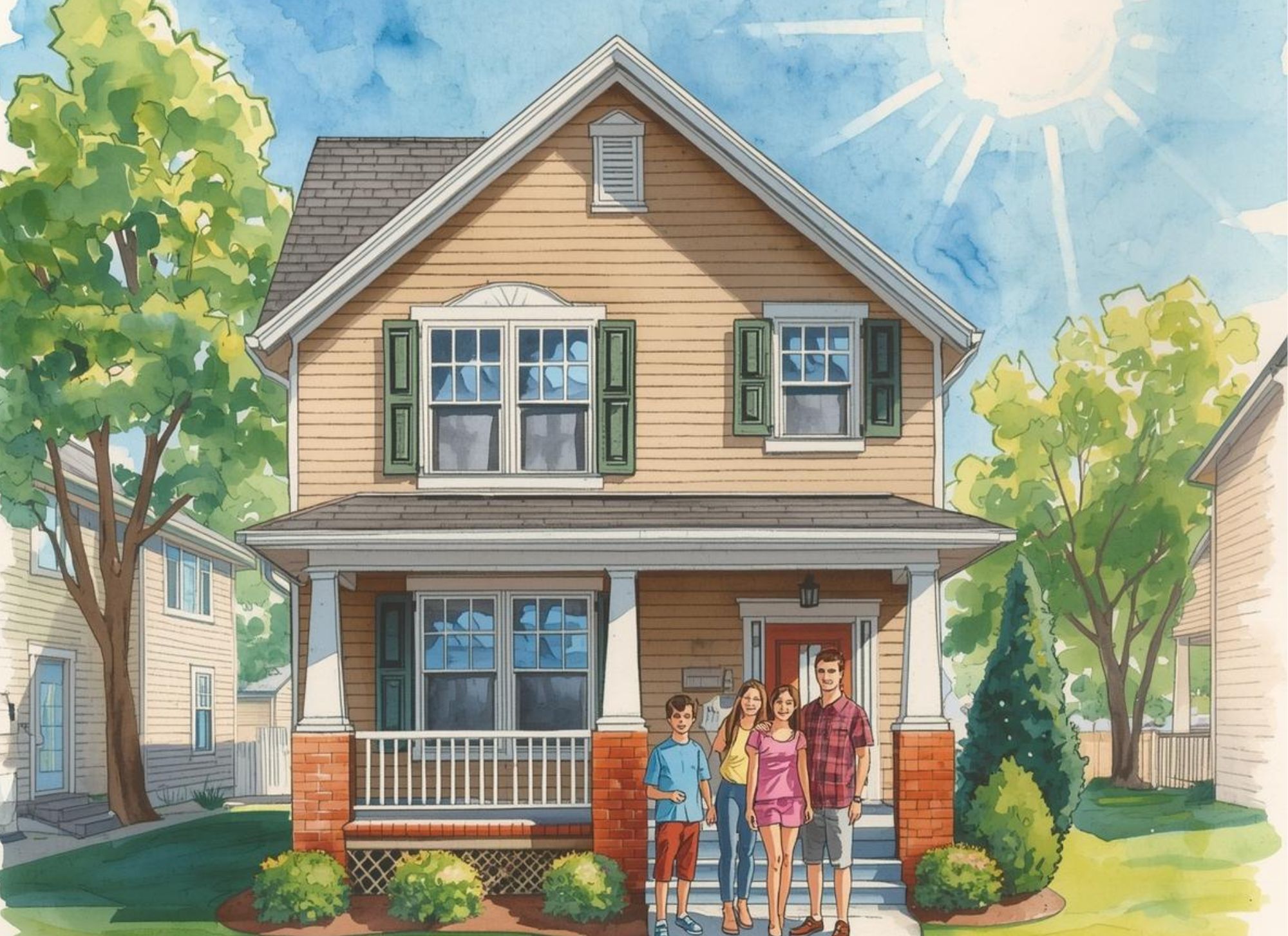
Understand HO-3 homeowners insurance—the most popular home coverage in America. Learn what’s covered, common exclusions, how it compares to other policies, and whether it’s right for you.
The $180,000 Tree That Changed Everything
When a massive oak tree crashed through the Johnsons’ roof during a severe thunderstorm, destroying their master bedroom, home office, and causing extensive water damage throughout the house, they faced a moment of truth about their homeowners insurance.
They had an HO-3 policy—the most common type of homeowners insurance in America, covering about 80% of insured homes. As they nervously called their insurance company, they had no idea whether the $180,000 in damage would be covered, partially covered, or denied entirely.
Here’s what happened: The carrier sent an adjuster within 48 hours. The tree damage? Fully covered under the dwelling protection. The destroyed furniture, electronics, and clothing? Covered under personal property provisions. The three months they spent in temporary housing while repairs were completed? Covered under loss of use provisions. The neighbor’s fence that the tree damaged on its way down? Covered under personal liability protection.
Total out-of-pocket cost to the Johnsons: Their $2,500 deductible.
But here’s the critical part they learned: If that same tree had fallen due to termite damage they’d neglected to address, the claim would have been denied as maintenance-related. If their basement had flooded from the storm (a common scenario), that damage wouldn’t have been covered—flooding requires separate flood insurance. If an earthquake had caused the tree to fall, no coverage.
Understanding exactly what an HO-3 policy covers—and critically, what it excludes—is the difference between financial protection and financial disaster when home damage occurs.
This comprehensive guide explains everything you need to know about HO-3 homeowners insurance: what it is, how coverage works, what’s included and excluded, how it compares to other policy types, and whether it’s the right choice for your home.
What Is an HO-3 Homeowners Insurance Policy? The Foundation of Home Protection
An HO-3 homeowners insurance policy is a “special form” policy providing open-peril (all-risk) coverage for your dwelling and other structures, combined with named-peril coverage for personal property, plus liability protection and additional living expense coverage.
Let’s break down that definition because understanding the distinction between “open-peril” and “named-peril” coverage is absolutely critical:
Open-Peril vs. Named-Peril Coverage: The Critical Distinction
Open-Peril Coverage (All-Risk): Everything is covered EXCEPT what’s specifically excluded in your policy. The insurance company must prove an exclusion applies to deny a claim.
Think of it like this: If something damages your home, you’re covered unless the insurance company can point to a specific exclusion in your policy explaining why that particular cause isn’t covered.
Named-Peril Coverage: Only specifically listed causes of damage are covered. If your loss results from something not on the list, you’re not covered. You must prove your loss resulted from a covered peril.
Think of it like this: If something damages your possessions, you’re only covered if you can show it was caused by one of the perils specifically named in your policy.
How HO-3 Combines Both Approaches
HO-3 policies use a hybrid approach:
Open-peril coverage for:
- Your house (dwelling)
- Detached structures (garage, shed, fence)
Named-peril coverage for:
- Personal property (furniture, clothing, electronics, belongings)
- Personal belongings away from home
This combination provides broader protection for your home structure while using more limited (and therefore less expensive) coverage for your possessions.
Why HO-3 Is America’s Most Popular Homeowners Policy
Approximately 80-85% of homeowners in the United States have HO-3 policies, making it by far the most common form of homeowners insurance. Its popularity stems from:
Comprehensive dwelling protection: The open-peril approach means virtually any structural damage is covered unless specifically excluded
Affordable pricing: More affordable than HO-5 (which provides open-peril coverage for personal property too) while offering better protection than HO-2 (which uses named-perils for dwelling coverage)
Mortgage lender acceptance: All mortgage lenders accept HO-3 policies as meeting insurance requirements
Wide availability: Nearly every major insurance carrier offers HO-3 policies with standardized coverage forms
Balance of protection and cost: The sweet spot between comprehensive coverage and reasonable premiums
The Six Coverages Within HO-3 Policies: Understanding What You’re Buying
HO-3 policies include six distinct coverage sections, each serving a specific purpose. Understanding each coverage is essential for evaluating whether your policy limits are adequate.
Coverage A: Dwelling Protection (Open-Peril)
What it covers: Your house and structures attached to it, including:
- The physical structure of your home
- Built-in appliances (furnace, central air conditioning, water heater)
- Permanently installed fixtures (cabinets, countertops, flooring)
- Plumbing, electrical, and HVAC systems
- Attached garages
- Attached decks and porches
- Walls, roof, and foundation
How much coverage you need: The dwelling coverage limit should equal your home’s replacement cost—the amount needed to completely rebuild your home at current construction costs, NOT your home’s market value.
Critical calculation:
- Market value includes land (which doesn’t need insurance)
- Replacement cost considers only structure rebuilding costs
- Typically 80-100% of market value in most markets
- Can exceed market value in markets where land is expensive (think: teardowns in prime locations)
Example: Your home’s market value: $400,000 Land value: $150,000 Replacement cost: $320,000 Recommended Coverage A limit: $320,000
The 80% rule: To avoid coinsurance penalties, you must carry coverage equal to at least 80% of replacement cost. If you don’t, the insurance company will only pay a proportional amount of claims.
Calculation if you’re underinsured: Claim payment = (Insurance Carried / Insurance Required) × Loss Amount
Example: Replacement cost: $300,000 Insurance required (80%): $240,000 Insurance actually carried: $180,000 Loss amount: $100,000
Claim payment = ($180,000 / $240,000) × $100,000 = $75,000
You’d only receive $75,000, not the full $100,000, leaving you $25,000 short.
Replacement cost vs. actual cash value:
- Replacement cost: Insurance pays to rebuild/repair without depreciation (what you want)
- Actual cash value: Insurance pays replacement cost minus depreciation (cheaper premiums, less protection)
Most HO-3 policies offer replacement cost coverage for dwellings, but verify this with your policy documents.
Coverage B: Other Structures (Open-Peril)
What it covers: Structures on your property NOT attached to your main house:
- Detached garages
- Storage sheds
- Freestanding workshops
- Pool houses and cabanas
- Gazebos and pergolas
- Fences
- Driveways and walkways
- Swimming pools
- Standalone solar panel installations
Standard coverage limit: Typically 10% of your Coverage A dwelling limit
Example: If Coverage A is $300,000, Coverage B automatically provides $30,000 for other structures.
When to increase Coverage B:
- Expensive detached garage ($30,000 may not cover a two-car detached garage rebuild)
- Multiple outbuildings
- Elaborate fencing
- Swimming pool with equipment and surround structures
How to increase: Request higher limits (usually available up to 20-25% of dwelling coverage) for additional premium.
Important limitation: Coverage B doesn’t apply to structures used for business purposes. If you run a business from a detached structure, you need commercial property insurance.
Coverage C: Personal Property (Named-Peril)
What it covers: Your belongings and the belongings of household family members:
- Furniture
- Clothing and shoes
- Electronics (TVs, computers, tablets, phones)
- Appliances not built-in
- Dishes, cookware, and kitchenware
- Books, decorations, and artwork
- Tools and equipment
- Sporting goods and hobby equipment
- Jewelry (up to sub-limits, typically $1,500-$2,500)
- Bicycles
- Musical instruments
Standard coverage limit: Typically 50-70% of Coverage A dwelling limit
Example: Coverage A of $300,000 provides $150,000-$210,000 for personal property
Named perils covered (standard list):
- Fire or lightning
- Windstorm or hail
- Explosion
- Riot or civil commotion
- Aircraft damage
- Vehicle damage
- Smoke
- Vandalism or malicious mischief
- Theft
- Volcanic eruption
- Falling objects
- Weight of ice, snow, or sleet
- Accidental discharge or overflow of water or steam
- Sudden and accidental tearing apart, cracking, burning, or bulging
- Freezing of plumbing, heating, AC, or sprinkler systems
- Sudden and accidental damage from artificially generated electrical current
Critical exclusions for personal property:
- Flood damage
- Earthquake damage
- Wear and tear, deterioration
- Insects, vermin, rodents
- Mechanical breakdown
- Intentional damage
Special limits for certain property types:
Most HO-3 policies include sub-limits for specific high-value items:
- Jewelry, watches, furs: $1,500-$2,500 total
- Silverware, goldware: $2,500 total
- Firearms: $2,500 total
- Business property: $2,500 total
- Securities, cash, valuable papers: $200-$500
- Watercraft (including trailers, equipment): $1,500
- Trailers: $1,500
How to cover high-value items: Purchase “scheduled personal property” endorsements (also called “floaters”) that provide open-peril coverage without sub-limits for:
- Engagement rings and expensive jewelry
- Art and collectibles
- Expensive musical instruments
- Camera equipment
- Antiques
- Wine collections
Replacement cost vs. actual cash value for personal property: Standard HO-3 policies may provide actual cash value (depreciated value) for personal property. For better protection, purchase a replacement cost endorsement for an additional premium, ensuring you receive enough to buy new replacements.
Coverage D: Loss of Use (Additional Living Expenses)
What it covers: When your home becomes uninhabitable due to a covered loss, this coverage pays for:
- Temporary housing: Hotel, short-term rental, or apartment costs
- Meals: Restaurant costs exceeding your normal grocery expenses
- Storage: Costs to store furniture and belongings during repairs
- Laundromat/dry cleaning: If your damaged home has a washer/dryer
- Pet boarding: If temporary housing doesn’t allow pets
- Increased transportation: Additional commuting costs from temporary location
Standard coverage limit: Typically 20-30% of Coverage A dwelling limit
Example: Coverage A of $300,000 provides $60,000-$90,000 for loss of use
Time limits: Coverage continues for the shortest of:
- The time needed to repair or rebuild
- The time needed to permanently relocate
- The policy limit is exhausted
Typically, claims can run 3-12 months for major damage requiring extensive repairs.
What’s NOT covered: Insurance pays only the difference between your normal living expenses and additional living expenses, not total living costs.
Example:
- Normal monthly housing expenses (mortgage, utilities): $2,500
- Temporary apartment and utilities during repairs: $3,200
- Normal monthly food costs: $800
- Restaurant meals during displacement: $1,400
- Additional living expenses covered: ($3,200 – $2,500) + ($1,400 – $800) = $1,300/month
Fair rental value option: If you rent out part of your home and it becomes uninhabitable, Coverage D pays for lost rental income during the repair period.
Coverage E: Personal Liability Protection
What it covers: Legal responsibility for bodily injury or property damage you or household family members cause to others:
Common scenarios:
- Visitor slips and falls on your icy driveway, breaking their wrist
- Your dog bites a neighbor, requiring medical treatment
- Your child accidentally breaks a neighbor’s expensive window playing baseball
- Tree from your property falls on neighbor’s car
- You accidentally damage someone else’s property while visiting their home
- Libel, slander, or defamation claims (limited coverage)
What the coverage pays:
- Legal defense costs (lawyers, court fees)
- Settlements or judgments against you
- Medical expenses for injured parties (under Coverage F if small claims)
Standard coverage limits:
- Minimum: $100,000 (seriously inadequate for most homeowners)
- Common: $300,000-$500,000
- Recommended for most homeowners: $500,000-$1,000,000
- High net worth individuals: $1,000,000+ plus umbrella policy
Cost to increase: Raising liability limits is surprisingly inexpensive:
- $100,000 to $300,000: Usually $20-$40/year
- $300,000 to $500,000: Usually $15-$30/year
- $500,000 to $1,000,000: Usually $30-$50/year
Critical exclusions:
- Intentional acts
- Business activities (need business liability insurance)
- Professional services (need professional liability insurance)
- Motor vehicle accidents (covered by auto insurance)
- Some dog breeds (varies by insurer)
Defense costs: Most policies pay legal defense costs in addition to the liability limit, not as part of it. This is valuable—legal fees can easily exceed $100,000 even if you ultimately win the case.
Coverage F: Medical Payments to Others
What it covers: Medical expenses for people injured on your property or by you/your family members, regardless of who’s at fault:
Common scenarios:
- Guest trips over your garden hose and sprains their ankle
- Child falls off your trampoline
- Visitor gets minor burn from your fire pit
- Delivery person slips on your wet entrance
Standard coverage limits: $1,000-$5,000 per person, per incident
Key distinction from Coverage E: Coverage F pays quickly for minor injuries without determining fault or requiring lawsuits. Coverage E applies to larger claims where legal liability is established.
What it covers:
- Doctor visits
- Hospital emergency room treatment
- Ambulance transportation
- Prescription medications related to the injury
- Follow-up medical care
Time limit: Usually must be incurred within 3 years of the accident
Who’s NOT covered:
- You and household family members
- Regular residents of your home
- People injured while working on your property as contractors
Smart use: Offer to pay medical bills under Coverage F quickly to prevent small injuries from becoming liability claims requiring Coverage E.
Common HO-3 Policy Exclusions: What Your Coverage WON’T Pay For
Understanding exclusions is just as important as understanding coverages. These are the major perils specifically excluded from HO-3 dwelling coverage:
Flood Damage
What’s excluded:
- Rising water from rivers, streams, or ocean
- Storm surge from hurricanes
- Heavy rain causing street flooding that enters your home
- Snowmelt overwhelming drainage systems
- Dam or levee failures
Why it’s excluded: Flood risk is geographically concentrated, making it uninsurable through standard homeowners policies. Private insurers can’t spread risk adequately.
Solution: Purchase separate flood insurance through:
- National Flood Insurance Program (NFIP): Government-backed flood insurance, maximum $250,000 for dwelling, $100,000 for contents
- Private flood insurance: Increasing options offering higher limits and broader coverage
Critical note: HO-3 policies DO cover water damage from:
- Burst pipes
- Leaking roofs (if sudden, not from maintenance neglect)
- Appliance malfunctions (washing machine overflow)
- Ice dams causing roof leaks
The distinction: Water coming from above or within your home is often covered; water rising from ground level is not.
Earthquake Damage
What’s excluded:
- Ground shaking and earth movement
- Landslides and mudslides (unless caused by covered perils)
- Sinkholes (in most states)
- Mine subsidence
- Soil movement or settling
Why it’s excluded: Like floods, earthquake risk is geographically concentrated (California, Pacific Northwest, New Madrid Seismic Zone) and can cause catastrophic widespread losses.
Solution: Purchase separate earthquake insurance through:
- State-sponsored earthquake authorities (California Earthquake Authority)
- Private insurers offering earthquake endorsements
- Standalone earthquake policies
Typical costs: High-risk areas: $800-$2,500 annually Moderate-risk areas: $200-$800 annually
Deductibles: Usually 10-20% of dwelling coverage (much higher than standard homeowners deductibles)
Maintenance-Related Issues and Wear and Tear
What’s excluded:
- Gradual deterioration
- Termite, insect, or rodent damage
- Rot, mold, or mildew (unless resulting from covered sudden water damage)
- Rust or corrosion
- Foundation settling or cracking over time
- Roof wear from age
- Mechanical breakdown of systems
Why it’s excluded: Insurance covers sudden, accidental events, not foreseeable maintenance issues homeowners should address through regular upkeep.
Example of denied claim: Your roof develops multiple leaks due to age and deteriorated shingles. Water damage occurs over several months. Claim denied—the damage resulted from deferred maintenance, not a sudden covered peril.
Example of covered claim: A sudden severe hailstorm damages your roof, causing immediate leaks. Claim approved—damage from sudden windstorm/hail (covered peril).
Neglect and Deliberate Acts
What’s excluded:
- Damage worsened by failure to protect property after a loss
- Intentional damage by you or household members
- Damage from failing to maintain property
- Vacant home damage (after 30-60 consecutive days vacant)
Example: Your roof suffers minor wind damage. You delay repairs. Rain enters and causes extensive water damage. The insurance company may pay for the initial wind damage but deny the worsening water damage as resulting from neglect.
Nuclear Hazard, War, and Governmental Action
What’s excluded:
- Nuclear radiation or contamination
- War, invasion, or military action
- Property seizure or destruction by government order
Why it’s excluded: Catastrophic events beyond insurance industry capacity, or actions by governmental entities
Business and Professional Activities
What’s excluded:
- Business property kept at home (beyond minimal limits)
- Liability from business activities
- Professional liability
- Property damage from business operations
Solution:
- Home business insurance endorsements
- Business owners policies (BOP)
- Commercial general liability insurance
Intentional Losses and Criminal Acts
What’s excluded:
- Damage you or family members cause intentionally
- Property seized related to criminal activity
- Losses from fraud or illegal activities
HO-3 vs. Other Homeowners Policy Types: Choosing the Right Coverage
Homeowners insurance comes in several standardized forms, each offering different coverage levels and prices.
HO-1: Basic Form (Rarely Used Today)
Coverage approach: Named-perils for dwelling and personal property
Perils covered: Only 10 basic perils (fire, lightning, windstorm, hail, explosion, riot, aircraft, vehicles, smoke, vandalism, theft, volcanic eruption)
Who it’s for: Essentially obsolete; almost no carriers offer HO-1 anymore
Cost: Cheapest option but inadequate protection for most homeowners
HO-2: Broad Form
Coverage approach: Named-perils for dwelling, other structures, and personal property
Perils covered: 16 perils (the basic 10 plus falling objects, weight of ice/snow/sleet, water damage from plumbing/heating/AC, frozen plumbing, electrical damage, sudden glass breakage)
Comparison to HO-3:
- Less expensive than HO-3
- Dwelling coverage is named-perils instead of open-perils
- Personal property coverage identical to HO-3
Who it’s for:
- Budget-conscious homeowners
- Older homes where replacement cost is low
- Properties in low-risk areas
Cost comparison: Typically 5-15% less expensive than HO-3
HO-3: Special Form (Most Common)
Coverage approach: Open-perils for dwelling and other structures; named-perils for personal property
Who it’s for: The standard choice for 80% of homeowners, offering the best balance of coverage and cost
Cost: Moderate pricing between HO-2 and HO-5
HO-5: Comprehensive Form (Premium Option)
Coverage approach: Open-perils for dwelling, other structures, AND personal property
Key advantage over HO-3: Your belongings are covered for all perils except specific exclusions, not just the 16 named perils in HO-3
Real-world impact: Accidental damage to your belongings (dropping expensive camera, spilling wine on expensive rug, children breaking valuables) may be covered under HO-5 but not HO-3
Who it’s for:
- Homeowners with expensive personal property
- Those wanting maximum protection
- People who can afford 15-20% higher premiums
Cost comparison: Typically 15-25% more expensive than HO-3
Availability: Not all carriers offer HO-5; you may need high-end insurers like Chubb, AIG, or Pure
HO-4: Renters Insurance (Not for Homeowners)
What it covers: Personal property and liability for renters; the landlord insures the building
HO-6: Condo Insurance (Not for Single-Family Homes)
What it covers: Unit interior, personal property, liability, and loss assessment for condo owners; the condo association insures the building
HO-8: Modified Coverage Form (Older/Historic Homes)
Coverage approach: Similar to HO-1 but with modified dwelling coverage
When used: Older homes where replacement cost far exceeds market value (think: $400,000 to rebuild a home worth $200,000)
Key difference: Pays to repair or replace with functionally equivalent materials, not exact historic replicas
Who it’s for: Owners of historic homes built before 1950 where modern building codes or historic preservation requirements make full replacement cost coverage prohibitively expensive
Real-World Claim Scenarios: When HO-3 Coverage Pays (and Doesn’t)
Understanding how HO-3 policies work in practice requires examining actual claim scenarios.
Scenario 1: Kitchen Fire – FULLY COVERED
What happened: Grease fire in kitchen spreads to cabinets and ceiling, causing $45,000 in damage to kitchen structure and $8,000 in damaged appliances, cookware, and furniture.
Coverage analysis:
- Fire is a covered peril for both dwelling and personal property
- Coverage A pays for structural repairs: $45,000
- Coverage C pays for damaged belongings: $8,000
- Total payout: $53,000 (minus deductible)
Homeowner pays: $2,500 deductible
Scenario 2: Basement Flood from Heavy Rain – NOT COVERED
What happened: Severe rainstorm causes street flooding. Water enters basement through window wells, damaging $25,000 in finished basement (drywall, flooring, built-in entertainment center) plus $15,000 in stored belongings.
Coverage analysis:
- Flood damage excluded from HO-3 coverage
- Even though it’s the basement of the dwelling, rising water from ground level is flood damage
- Total payout: $0
Homeowner pays: $40,000 out of pocket (would have been covered with flood insurance)
Scenario 3: Burst Pipe Water Damage – COVERED
What happened: Pipe bursts during winter freeze, causing water damage to floors, walls, and furniture totaling $18,000.
Coverage analysis:
- Sudden water discharge from plumbing is a covered peril
- Coverage A pays for structural damage: $12,000
- Coverage C pays for damaged furniture: $6,000
- Total payout: $18,000 (minus deductible)
Homeowner pays: $2,500 deductible
Important distinction: If the pipe burst because the homeowner left the house unheated in winter (neglect), the claim might be denied or reduced.
Scenario 4: Stolen Jewelry Exceeds Sub-Limits – PARTIALLY COVERED
What happened: Burglary results in theft of $12,000 in jewelry including a $7,000 engagement ring.
Coverage analysis:
- Theft is a covered peril for personal property
- However, jewelry sub-limit is $2,500
- Total payout: $2,500 (the sub-limit, not the actual loss)
Homeowner pays: $9,500 out of pocket for uninsured jewelry (plus deductible)
Lesson: Schedule high-value jewelry separately to avoid sub-limits
Scenario 5: Tree Falls on House – COVERED
What happened: Healthy tree blown over in windstorm crashes through roof, causing $65,000 in structural damage and destroying $12,000 in bedroom furniture and electronics.
Coverage analysis:
- Windstorm is a covered peril
- Falling objects is a covered peril for personal property
- Coverage A pays structural damage: $65,000
- Coverage C pays damaged belongings: $12,000
- Total payout: $77,000 (minus deductible)
Homeowner pays: $2,500 deductible
Scenario 6: Dog Bite Lawsuit – LIABILITY COVERED
What happened: Homeowner’s dog bites a neighbor, requiring medical treatment. Neighbor sues for medical bills, pain and suffering. Settlement: $85,000.
Coverage analysis:
- Dog bite liability covered under Coverage E
- Legal defense costs paid separately (additional $35,000)
- Total costs paid by insurance: $120,000
Homeowner pays: $0 (assuming liability limit is at least $85,000)
Scenario 7: Long-Term Roof Leak from Poor Maintenance – NOT COVERED
What happened: Homeowner neglects to replace aging roof shingles. Gradual leaks over 6 months cause $30,000 in attic and ceiling damage.
Coverage analysis:
- Damage resulted from maintenance neglect, not sudden covered peril
- Total payout: $0
Homeowner pays: $30,000 out of pocket
Enhancing Your HO-3 Policy: Important Endorsements and Riders
Standard HO-3 policies can be enhanced with additional coverage through endorsements (also called riders or floaters).
Essential Endorsements to Consider
1. Replacement Cost for Personal Property
- Replaces actual cash value (depreciated) coverage with replacement cost
- Additional premium: $30-$80 annually
- Ensures you receive enough to buy new replacements for damaged items
2. Increased Dwelling Coverage (Extended Replacement Cost/Guaranteed Replacement Cost)
- Extended replacement cost: Covers 125-150% of dwelling limit if rebuilding costs exceed your limit
- Guaranteed replacement cost: Covers full rebuilding costs regardless of dwelling limit
- Protects against underinsurance and construction cost inflation
- Additional premium: $50-$150 annually
3. Scheduled Personal Property (Floaters)
- Provides open-peril coverage without sub-limits for high-value items
- Common items to schedule: Jewelry, art, musical instruments, cameras, collectibles, wine
- Coverage often extends worldwide
- Requires appraisals for items over $5,000-$10,000
- Cost: Approximately 1-3% of item value annually
4. Water Backup and Sump Pump Coverage
- Covers sewer and drain backups into your home
- Covers sump pump failures causing water damage
- Limits typically $5,000-$25,000
- Additional premium: $40-$100 annually
- Increasingly important with aging municipal infrastructure
5. Earthquake Coverage
- Adds earthquake damage coverage (otherwise excluded)
- Required in high-risk areas like California
- High deductibles (10-20% of dwelling coverage)
- Premium varies dramatically by location: $200-$2,500 annually
6. Service Line Coverage
- Covers repair of underground utility lines on your property (water, sewer, electrical, internet/cable)
- Standard HO-3 typically excludes these
- Limits typically $10,000-$25,000
- Additional premium: $25-$75 annually
7. Equipment Breakdown (Mechanical Breakdown)
- Covers mechanical/electrical breakdown of HVAC, appliances, electronics
- Particularly valuable for expensive systems (geothermal, high-end appliances)
- Additional premium: $40-$100 annually
8. Identity Fraud Expense Coverage
- Reimburses costs to restore identity after theft (legal fees, lost wages, credit monitoring)
- Limits typically $15,000-$50,000
- Additional premium: $20-$40 annually
9. Personal Injury
- Extends liability coverage to include libel, slander, defamation, invasion of privacy
- Particularly important for social media use
- Usually included in higher liability limits or umbrella policies
10. Animal Liability
- Covers dog breeds otherwise excluded (pit bulls, Rottweilers, German shepherds, etc.)
- Requires training certifications or bite history review
- Additional premium: $50-$200 annually depending on breed
How to Buy the Right HO-3 Policy: Expert Selection Guidance
Making informed HO-3 policy decisions requires systematic evaluation of your needs and carrier options.
Step 1: Calculate Appropriate Coverage Limits
Dwelling coverage (Coverage A):
- Get professional replacement cost estimate from insurance company or contractor
- Don’t use market value or tax assessments
- Consider building cost inflation in your area
- Add 25% buffer or purchase extended replacement cost endorsement
Personal property (Coverage C):
- Conduct home inventory (video or photos of all rooms and belongings)
- Estimate total value of possessions
- Ensure coverage limit exceeds inventory value
- Identify items needing scheduled coverage
Liability coverage (Coverage E):
- Minimum $300,000 for most homeowners
- $500,000-$1,000,000 for homeowners with significant assets or high-risk exposures (pools, trampolines, large dogs)
- Consider umbrella policy if net worth exceeds $500,000
Step 2: Choose Appropriate Deductible
Standard options:
- $500 (higher premiums, lower out-of-pocket at claims)
- $1,000 (balanced option, most common)
- $2,500 (lower premiums, higher out-of-pocket)
- $5,000 (lowest premiums, significant out-of-pocket risk)
Factors to consider:
- Emergency fund size (can you afford larger deductible?)
- Claims frequency (annual small claims suggest lower deductible)
- Risk tolerance
- Premium savings (usually 10-30% reduction moving from $500 to $2,500)
Step 3: Identify Needed Endorsements
Review the endorsements listed above and determine which apply to your situation:
- High-value possessions → Scheduled personal property
- Basement or older plumbing → Water backup coverage
- Expensive HVAC/appliances → Equipment breakdown
- High earthquake/flood risk → Appropriate additional coverage
Step 4: Compare Carriers and Obtain Quotes
Get quotes from 5-7 carriers:
- Large national carriers (State Farm, Allstate, Liberty Mutual)
- Regional carriers with strong local presence
- High-rated carriers specializing in homeowners (Amica, Auto-Owners, Erie)
Verify financial strength:
- AM Best rating A- or better
- S&P rating A- or better
- Multiple agency confirmation of financial stability
Check claims handling reputation:
- J.D. Power customer satisfaction scores
- NAIC complaint index (below 1.0 preferred)
- Online reviews (looking for patterns, not isolated complaints)
Compare total value, not just price:
- Coverage limits (are you comparing identical coverage?)
- Deductibles (higher deductibles mean lower premiums)
- Endorsements included
- Discount availability
Step 5: Maximize Discounts
Common HO-3 policy discounts:
- Multi-policy (bundling): 15-25% discount for combining home and auto insurance
- Home security systems: 5-20% discount (professionally monitored systems get higher discounts)
- Fire protection: 5-15% for smoke alarms, fire extinguishers, sprinkler systems
- New home: 8-15% for homes less than 10 years old
- Claims-free: 10-15% for 3-5 years without claims
- Loyalty: 5-10% after several years with same carrier
- Automated payments: 3-5% for autopay setup
- Gated community: 5-10% in some cases
- Wind mitigation: 10-45% for hurricane-resistant features in coastal areas
Stackable discounts: Some carriers allow stacking multiple discounts, potentially reducing premiums by 30-50%
Frequently Asked Questions About HO-3 Homeowners Insurance
Is HO-3 insurance required by law?
No, homeowners insurance isn’t legally required. However, mortgage lenders require it as a loan condition, and HO-3 policies meet all lender requirements. If you own your home outright, insurance is optional but highly recommended.
Does HO-3 insurance cover mold?
Limited coverage for mold resulting from covered sudden water damage (like burst pipes). Gradual mold from humidity, leaks, or poor ventilation is excluded. Most policies include mold coverage limits of $10,000-$25,000. For homes in humid climates or with mold history, purchase additional mold coverage endorsements.
How much does HO-3 insurance cost?
National average: $1,400-$2,000 annually, but varies dramatically by:
- Location (coastal/catastrophe-prone areas: $2,500-$5,000+)
- Dwelling value (higher home values = higher premiums)
- Construction type (wood frame costs more than brick/stone)
- Age of home (older homes often cost 15-30% more)
- Claims history
- Credit score (in states that allow credit-based insurance scoring)
Can I switch from HO-2 to HO-3 mid-policy?
Yes, most carriers allow mid-policy upgrades. You’ll pay the difference in premium prorated for the remaining policy period. Contact your agent or carrier to request the change.
Does HO-3 cover my home-based business?
Very limited coverage ($2,500-$5,000 typically). If you operate a business from home, purchase either:
- Home business insurance endorsement (for very small businesses)
- Business owners policy (BOP) for more substantial operations
- Commercial general liability for liability protection
Will HO-3 cover an Airbnb or short-term rental?
No, standard HO-3 policies exclude short-term rentals. You need:
- Landlord/rental dwelling policy (DP-3)
- Short-term rental endorsement to HO-3 (some carriers offer)
- Commercial property and liability coverage
Failing to disclose short-term rental activity can void your policy and result in claim denials.
Does HO-3 insurance cover detached structures used as living space?
Yes, but Coverage B limits may be inadequate. If your detached structure (garage apartment, casita, guest house) is used for living space, increase Coverage B limits or schedule it separately. Some carriers require separate dwelling policies for substantial detached living spaces.
What happens if I’m underinsured when a total loss occurs?
You’ll receive payment up to your Coverage A limit, but that may not cover full rebuilding costs. Example: Replacement cost $400,000, Coverage A limit $300,000, total loss from fire. You receive $300,000 maximum, leaving you $100,000 short. This is why extended or guaranteed replacement cost endorsements are valuable.
Taking Action: Getting the Right HO-3 Coverage for Your Home
Making smart HO-3 insurance decisions protects your largest financial asset while avoiding overpayment for unnecessary coverage.
Immediate steps:
1. Review your current coverage
- Pull out your declarations page
- Verify dwelling coverage equals current replacement cost
- Check personal property limits against home inventory
- Confirm liability coverage meets recommendations
- Identify gaps requiring endorsements
2. Conduct a home inventory
- Video every room, opening closets and drawers
- Photograph valuables, serial numbers, receipts
- Store inventory off-site (cloud storage)
- Update annually
3. Get professional replacement cost estimate
- Request from your insurance company (usually free)
- Consider independent appraisal for unique homes
- Account for current construction costs and local building requirements
4. Shop your coverage annually
- Compare quotes from multiple carriers
- Don’t focus solely on price—evaluate total value
- Check for coverage gaps or unnecessary endorsements
- Verify you’re receiving all eligible discounts
5. Schedule high-value items
- Appraise jewelry, art, collectibles
- Purchase scheduled property endorsements
- Maintain updated appraisals (every 3-5 years)
6. Address maintenance issues
- Replace aging roof before leaks develop
- Update electrical and plumbing systems
- Address foundation issues
- Document all improvements (increases replacement cost)
7. Increase liability protection as assets grow
- Review liability limits every 2-3 years
- Consider umbrella policy when net worth exceeds $500,000
- Ensure coverage reflects current risk exposures
The Bottom Line: HO-3 as the Foundation of Home Protection
HO-3 homeowners insurance represents the industry-standard balance between comprehensive dwelling protection and affordable premiums, making it the right choice for approximately 80% of American homeowners.
Its hybrid approach—open-peril coverage for your home structure combined with named-peril coverage for personal belongings—provides excellent protection against the vast majority of risks you’ll face while keeping costs reasonable. The six coverage sections work together to protect not just your house, but your financial stability when covered losses occur.
However, HO-3 policies aren’t one-size-fits-all. Understanding what’s covered and critically what’s excluded allows you to make informed decisions about endorsements, additional coverage, and whether the standard HO-3 form meets your needs or whether HO-2 (budget option) or HO-5 (premium option) makes more sense.
The key to successful HO-3 coverage isn’t just buying a policy—it’s buying the RIGHT policy with appropriate limits, necessary endorsements, and from a financially strong carrier with excellent claims handling reputation. When major losses occur, you’ll discover whether you made smart insurance decisions during the calm purchasing process or whether you left dangerous gaps in your protection.
Don’t wait for a claim to discover your coverage is inadequate. Invest the time now to understand your HO-3 policy, verify your limits, add necessary endorsements, and ensure your most valuable asset receives the protection it deserves.
Ready to review or purchase HO-3 homeowners insurance? Contact an independent insurance agent who can compare policies from multiple carriers, helping you find the best combination of coverage, price, and carrier quality for your specific home and needs.
Concerned about coverage gaps? Schedule a policy review with your current agent, bringing your declarations page and a recent home inventory. Identify areas where increased limits or additional endorsements would better protect your assets.
Experienced a recent claim denial? Request a detailed written explanation citing specific policy provisions. Consider filing an appeal with documentation demonstrating coverage should apply, or contact your state insurance department to file a complaint if you believe the denial is improper.