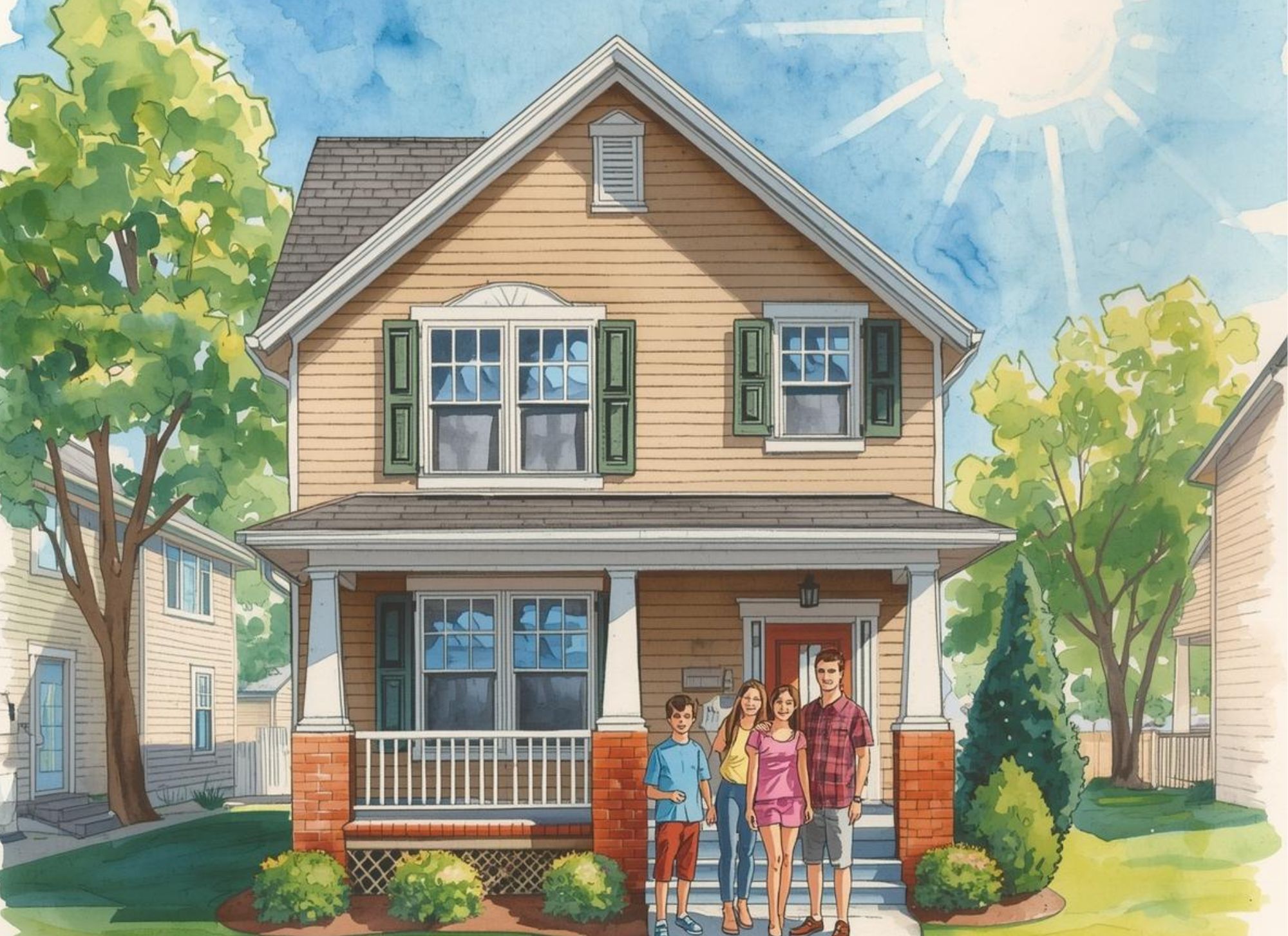


Learn proven strategies for making a competitive house offer that gets accepted. Expert tips on pricing, contingencies, preapproval, and negotiation tactics to win your dream home in any market.
Crafting an Irresistible Home Offer: Beyond Just the Price
You’ve found it—the house that checks every box. Perfect kitchen, ideal location, room for your growing family. Now comes the moment that separates dreamers from homeowners: making an offer compelling enough to beat the competition without overpaying by thousands.
The art of making a successful home offer has evolved dramatically. In today’s market, simply matching the asking price rarely guarantees acceptance. With 87% of homebuyers working with real estate agents and multiple-offer scenarios becoming standard in competitive markets, understanding offer strategy has never been more critical.
Here’s the reality that catches most first-time buyers off guard: your offer price, while important, represents just one element in a complex equation. Sellers evaluate timing, contingencies, buyer strength, closing flexibility, and overall deal certainty when choosing among competing offers. The highest bid doesn’t always win—sometimes it doesn’t even come close.
This comprehensive guide reveals the insider strategies that real estate professionals use to craft winning offers. You’ll learn how to position yourself as the ideal buyer, structure offers that appeal to seller priorities, and negotiate effectively without leaving money on the table.
Strategy #1: Establish Financial Credibility Through Mortgage Preapproval
Why Preapproval Outranks Almost Everything Else
In the hierarchy of offer strength, mortgage preapproval sits just below all-cash purchases. This single document transforms you from a hopeful browser into a serious buyer with verified purchasing power.
Preapproval vs. Pre-qualification: These terms sound similar but carry vastly different weight. Pre-qualification involves a casual conversation about your finances with no documentation review—essentially an educated guess about your borrowing capacity. Preapproval requires actual underwriter verification of your income, assets, credit, and debts, resulting in a conditional commitment from the lender.
Sellers and their agents immediately recognize this distinction. An offer backed by preapproval signals that your financing won’t fall through during escrow, reducing their risk of wasted time and a failed transaction.
The Competitive Advantage of Strong Preapproval
Consider two identical offers on a $450,000 home: both at asking price, both waiving inspection contingencies, both offering 30-day closings. Buyer A includes a pre-qualification letter. Buyer B provides preapproval from a reputable local lender. Buyer B wins virtually every time.
Why? Because sellers know that roughly 15-20% of home purchases fall through due to financing issues. Preapproval dramatically reduces this risk, making your offer exponentially more attractive even if the dollar amount matches competitors.
Maximizing Your Preapproval Impact
Choose your lender strategically: Local mortgage brokers and regional banks often carry more weight than online-only lenders or massive national banks. Listing agents recognize lenders with strong track records and trust them to close on time. Your preapproval letter from a respected local lender subtly communicates “this deal will definitely close.”
Get preapproved for more than you’ll offer: If your budget caps at $400,000, get preapproved for $450,000. This demonstrates financial cushion and ability to handle appraisal gaps. You’re never obligated to borrow the full amount—the preapproval simply showcases your capacity.
Keep your preapproval current: These letters typically expire after 60-90 days. If your house hunt extends beyond this window, request an updated letter. Submitting an expired preapproval undermines your credibility.
Include a proof of funds letter: If you’re making a significant down payment (20%+ or all cash), supplement preapproval with bank statements showing available funds. This dual documentation eliminates any question about your ability to close.
Common Preapproval Mistakes That Weaken Offers
Avoid these costly errors that diminish preapproval value:
Shopping with expired letters: Always verify your preapproval remains valid before making offers. Expired documentation signals disorganization or stale financing information.
Making major financial changes: Between preapproval and closing, don’t switch jobs, open new credit cards, make large purchases, or move money between accounts without consulting your loan officer. These actions can invalidate your preapproval.
Using online-only preapproval: While convenient, preapproval from online lenders without local presence sometimes raises seller concerns about ability to close smoothly. Balance convenience with local credibility.
Generic letters without specifics: Strong preapproval letters specify the exact property address, purchase price, and loan amount. Generic letters that don’t reference the specific transaction carry less weight.
Strategy #2: Partner With the Right Real Estate Agent
What “Right Agent” Really Means
The real estate industry includes roughly 1.5 million licensed agents with wildly varying experience, expertise, and effectiveness. Choosing wisely makes the difference between winning your dream home and losing to better-represented buyers.
Beyond credentials and years of experience: While experience matters, the ideal agent possesses specific qualities that directly impact offer success: deep knowledge of your target neighborhoods and their micro-markets, established relationships with other local agents (your agent’s reputation matters when negotiating), proven track record of winning multiple-offer situations, and excellent communication skills with both clients and listing agents.
How Your Agent Directly Impacts Offer Success
Strategic offer presentation: Skilled agents know how listing agents prefer to receive offers—email, phone call first, specific formatting preferences. These seemingly minor details influence how your offer is perceived and prioritized.
Relationship leverage: Real estate is relationship-driven. An agent with positive history with the listing agent enjoys subtle advantages. Their credibility vouches for you as a reliable buyer.
Market intelligence: Experienced local agents often hear about off-market opportunities, know which listings received multiple offers, and understand neighborhood pricing nuances that online research misses.
Negotiation expertise: Your agent translates seller motivations into offer strategy. They read between the lines during conversations with listing agents, identifying priorities you can address to strengthen your position.
Finding Your Ideal Agent Match
Interview multiple candidates: Speak with 3-5 agents before deciding. Ask specific questions: “How many of your recent buyers succeeded in multiple-offer situations?” “What’s your typical strategy when facing competing offers?” “How do you communicate during fast-moving negotiations?”
Evaluate chemistry and communication style: You’ll work closely with this person during a stressful process. Choose someone whose communication frequency matches your needs and who demonstrates willingness to tell you hard truths when necessary.
Verify local expertise: An agent who primarily works your target neighborhoods possesses insider knowledge that generalists lack. They know which streets command premium prices, which properties tend to sell quickly, and which neighborhoods are trending upward.
Check references thoroughly: Request contact information for 3-5 recent clients, particularly those who bought in competitive situations. Ask about communication quality, negotiation results, and whether they’d work with the agent again.
Red Flags to Avoid
Steer clear of agents who:
- Promise to “definitely get your offer accepted” (no one can guarantee this)
- Push you toward properties that don’t match your criteria
- Discourage questions or make you feel uninformed
- Show little interest in understanding your priorities
- Work primarily in different areas than you’re targeting
- Pressure you to make offers above your comfortable budget
Strategy #3: Research Property Value and Market Conditions Thoroughly
Understanding What You’re Really Offering For
Emotional attachment to a property can cloud judgment about appropriate offer price. Systematic research grounds your offer in market reality, preventing both overpayment and insulting lowball offers that damage negotiating position.
Comprehensive Comparable Sales Analysis
Professional appraisers and experienced agents use comparable sales (comps) to establish property value. You should too.
Identifying true comps: Not all similar-looking homes qualify as valid comparisons. True comps meet specific criteria: sold within the past 3-6 months (recent sales reflect current market), located within 0.5-1 mile of the subject property, similar square footage (within 15-20% typically), comparable bed/bath count and lot size, similar condition and updates, and same general neighborhood or subdivision.
Adjusting for differences: Rarely do perfect comps exist. Calculate adjustments for significant differences. For example, if your target home has an updated kitchen but the comp sold with original 1980s kitchen, subtract $15,000-25,000 from the comp’s sale price to estimate your target’s value. Common adjustment factors include kitchen/bathroom renovations, finished basements, garage spaces, lot size differences, and view or location premiums.
Price per square foot analysis: Calculate the price per square foot for valid comps, then apply the median figure to your target property. On a 2,000 square foot home in a neighborhood where comps average $225 per square foot, expect a market value around $450,000.
Evaluating Property History and Seller Motivation
Research the listing history: How long has the property been on market? Multiple price reductions suggest seller motivation and negotiating opportunity. Fresh listings (under 7 days) typically garner full-price or above-asking offers.
Investigate seller’s purchase price and date: Public records reveal what sellers paid and when they bought. Sellers sitting on substantial appreciation (bought for $300,000 seven years ago, listing at $550,000) often have more negotiating flexibility than recent buyers with minimal equity.
Assess days on market context: In hot markets, properties sell in 3-7 days. A 30-day listing might indicate pricing issues or property concerns. In slower markets, 45-60 days on market is normal. Adjust expectations to local norms.
Reading Current Market Temperature
Inventory levels dictate negotiating power: Under three months of available inventory indicates seller’s market conditions. Six months or more suggests buyer’s market. Calculate by dividing active listings by average monthly sales.
Absorption rate trends: Are homes selling faster or slower than three months ago? Accelerating absorption signals strengthening seller’s market. Slowing absorption creates buyer opportunities.
Price trend analysis: Review sold prices over the past 6-12 months. Consistent appreciation supports full-price or above-asking offers. Flat or declining prices suggest room for negotiation below asking.
Leveraging Online Resources and Tools
Zillow, Redfin, and Realtor.com: These platforms provide sold price data, price history, and property details. Cross-reference multiple sites for accuracy since data quality varies.
County assessor records: Public records show actual sale prices, property tax assessments, and ownership history. Some counties maintain excellent online databases accessible for free.
Neighborhood-specific apps: Nextdoor and local community forums sometimes reveal insider information about properties, neighborhood dynamics, and upcoming developments affecting values.
Strategy #4: Structure Contingencies Strategically
Understanding Contingency Impact on Offer Strength
Every contingency you include provides you an exit door from the purchase contract if specific conditions aren’t met. While contingencies protect your interests, they also introduce uncertainty for sellers—and uncertainty weakens offers.
The strategic question isn’t whether to include contingencies, but which ones are non-negotiable versus which ones you can safely waive to strengthen your competitive position.
The Three Standard Contingencies
Financing contingency: Allows you to cancel if you can’t secure mortgage approval. This protects you from losing your earnest money deposit if financing falls through.
Waiving strategy: Only consider waiving if you’re pre-underwritten (beyond simple preapproval) or paying all cash. Even strong preapproval doesn’t guarantee final approval—unexpected issues occasionally emerge during full underwriting.
Appraisal contingency: Permits cancellation if the home appraises below your offer price. Without this protection, you’d need to either bring additional cash to close the gap or walk away and forfeit your earnest money.
Waiving strategy: In competitive markets, buyers often waive appraisal contingencies. Only do this if you have cash reserves to cover potential gaps. For example, offering $500,000 with waived appraisal contingency means you’ll pay $500,000 regardless of appraisal results—even if it appraises at $475,000, you’ll need an extra $25,000 in cash.
Inspection contingency: Provides time to hire professional inspectors and negotiate repairs or credits based on findings. This protects against hidden problems like foundation issues, roof damage, or failing HVAC systems.
Waiving strategy: Risky but increasingly common in bidding wars. If you waive inspection contingency, conduct pre-offer inspections instead—hire an inspector before making your offer so you know what you’re buying. This costs $400-600 upfront but eliminates a major contingency.
Strategic Contingency Modifications
Beyond full waivers, you can modify contingencies to increase offer appeal while maintaining some protection:
Shortened timelines: Instead of standard 10-day inspection period, offer 5 days. This accelerates the process, appealing to sellers anxious to close quickly.
Limited repair thresholds: Agree to only request repairs for issues exceeding $5,000 or $10,000. This signals you’re reasonable and won’t nickel-and-dime over minor items.
As-is acknowledgment with inspection for information only: Agree to buy the property as-is but retain inspection rights for your own knowledge. This reassures sellers you won’t renegotiate based on findings.
Rent-back agreements: Offer to let sellers stay in the home 30-60 days post-closing, giving them moving flexibility. This creative contingency costs you little but provides significant value to sellers with timing challenges.
Contingencies You Should Never Waive
Some protections remain critical regardless of market competition:
Title contingency: Never waive your right to clear title. This protects against ownership disputes, liens, and legal issues that could jeopardize your ownership.
Right to final walk-through: Maintain your ability to verify the property’s condition before closing. Occasionally, sellers damage properties or remove fixtures between inspection and closing.
Your own due diligence: Even in hot markets, retain reasonable time to review HOA documents, property disclosures, and special assessments. Rushing through these documents can cost you tens of thousands in unexpected fees.
Strategy #5: Price Your Offer Intelligently
The Delicate Balance Between Competitive and Overpaying
Offer price receives the most attention but requires the most nuance. Too low and you insult the seller, ending negotiations before they begin. Too high and you overpay, potentially creating appraisal problems and buyer’s remorse.
Starting Point Strategies Based on Market Conditions
Hot seller’s market approach: Properties receive multiple offers within 48 hours, often selling above asking price. In these conditions, bidding below asking price virtually guarantees rejection. Strategy: Offer at or slightly above asking price (1-5% over), supplemented with strong terms like contingency waivers or flexible closing timelines. Your non-price terms differentiate your offer since price alone won’t win.
Balanced market approach: Inventory and buyer demand roughly equalize, creating rational pricing. Properties might sit 14-30 days before accepting offers. Strategy: Offer 2-5% below asking price as an opening bid, expecting counteroffers. This leaves negotiating room while showing serious interest. Full-price offers work for exceptionally desirable properties.
Buyer’s market approach: Inventory exceeds demand, properties linger 60+ days, and sellers make price reductions. Strategy: Offer 5-10% below asking price, especially on stale listings. Sellers with extended market time often accept significantly reduced offers to avoid further carrying costs.
Escalation Clauses: Power Tool or Dangerous Gamble?
Escalation clauses automatically increase your offer by a set amount if competing offers emerge, up to a specified maximum.
How they work: You offer $450,000 with an escalation clause stating you’ll beat any competing offer by $2,000, up to a maximum of $475,000. If another buyer offers $460,000, your offer automatically escalates to $462,000.
Strategic advantages: Escalation clauses help you remain competitive without immediately offering your maximum price. They signal serious commitment while potentially saving money if no competing offers materialize.
Significant downsides: You reveal your maximum price to the seller, eliminating negotiating leverage. Some listing agents consider escalation clauses as signs of weak strategy. Not all markets or agents embrace this tactic—verify your agent’s recommendation before using.
Best practices if using escalation clauses: Set your maximum carefully—this becomes your absolute ceiling. Require proof of competing offers so you verify the escalation is legitimate. Include the increment amount strategically—$1,000 increments in lower price ranges, $5,000-10,000 in luxury markets.
Cash Offer Premiums and Financing Considerations
Cash offers command 5-15% discounts: All-cash purchases eliminate financing contingencies, speed up closing timelines, and virtually guarantee completion. Sellers often accept cash offers below competing financed offers because certainty and speed carry tangible value.
Financing type impacts strength: Conventional loans generally process smoother than FHA or VA loans, making conventionally-financed offers slightly stronger. Government-backed loans sometimes involve additional inspections or requirements that concern sellers.
Larger down payments strengthen offers: A buyer putting 30% down demonstrates stronger financial position than a buyer stretching with 5% down. Consider highlighting your down payment percentage in your offer letter.
When to Go Above Asking Price
Offering above asking price makes strategic sense when:
- Property is underpriced relative to comps (potentially by inexperienced listing agent)
- You’re in multiple-offer situation with strong competition
- Home offers unique features unavailable in other properties
- Comparable sales support higher valuation than asking price
- You’ve identified this as your ideal home and value certainty over saving a few thousand
How much above asking: In competitive situations, 3-7% above asking price differentiates serious offers without dramatically overpaying. Coordinate with your agent based on specific competition indicators.
The “Odd Number” Pricing Psychology
Instead of round-number offers, strategic buyers use precise amounts to signal careful calculation rather than arbitrary bidding.
Rather than offering $450,000, offer $448,500 or $451,200. This subtle psychology suggests you’ve done thorough analysis and arrived at a specific valuation, not just thrown out a round number. Some agents swear by this tactic; others consider it meaningless. It costs nothing to try.
Advanced Offer Strategies for Competitive Situations
Personalizing Your Offer Without Crossing Lines
The personal letter approach: Some buyers write heartfelt letters to sellers describing why they love the home and how they’d cherish it. This can create emotional connection and differentiate identical-priced offers.
Fair housing concerns: However, personal letters increasingly face scrutiny for fair housing violations. Describing your family, ethnicity, religion, or other protected characteristics can expose sellers to discrimination claims. Some agents now refuse to forward personal letters.
The better approach: If you choose to write a letter, focus on the property itself—architectural features you appreciate, the garden you’ll maintain, the neighborhood community you’re excited to join. Avoid any personal characteristics covered by fair housing laws.
Proof of Funds and Financial Transparency
Bank statements matter: Particularly for large down payments or cash offers, include bank statements showing available funds. Black out specific account numbers if privacy concerns exist, but demonstrate the money exists.
Pre-underwriting documentation: Some buyers complete full mortgage underwriting before making offers, essentially securing final approval pending property appraisal. This premium-level preparation virtually eliminates financing risk for sellers.
Financial strength indicators: If you’re employed by stable, recognizable companies or have substantial assets beyond your down payment, subtle disclosure through your preapproval letter strengthens your profile.
Flexible Closing Timelines
Accommodate seller preferences: Ask the listing agent about the seller’s ideal closing timeline. Some need quick 14-day closings due to job relocations. Others prefer 60-90 days to coordinate their own purchases. Offering their preferred timeline, even if less convenient for you, creates goodwill.
Leaseback arrangements: Offer post-closing occupancy if sellers need extra time. Common structures include 30-60 day rent-back agreements where sellers pay modest daily rent (often just covering your mortgage payment) to stay after closing.
Flexible scheduling: Promise to work around seller showing schedules, inspection timing, and closing date preferences. This cooperation signals you’re easy to work with, a valuable quality sellers appreciate.
Earnest Money Deposit Strategy
Standard deposits: Typically 1-2% of purchase price in most markets. On a $400,000 home, expect $4,000-8,000 earnest money.
Competitive advantage deposits: Offering 3-5% earnest money demonstrates serious commitment. Larger deposits reassure sellers you won’t walk away capriciously, since you’d forfeit this money if you breach the contract without valid contingency.
Risk considerations: Only increase earnest money if you’re confident about the purchase and your contingencies protect you adequately. This money is at risk if you default.
Common Offer Mistakes That Cost Buyers Their Dream Homes
Mistake #1: Waiting Too Long to Decide
In competitive markets, desirable properties receive offers within 24-72 hours of listing. Buyers who hesitate, wanting to “think about it” or “see a few more properties first,” often lose to decisive competitors.
The solution: Do your homework before viewing properties. Know your budget, understand the neighborhood, and have your agent’s advice ready. When you find the right home, act quickly—within hours, not days.
Mistake #2: Getting Emotionally Attached to One Property
Falling in love with a house before your offer is accepted sets you up for disappointment and poor negotiation positioning.
The solution: Maintain emotional distance until you’re under contract. Continue viewing other properties until your offer is accepted. This mindset helps you walk away from bad deals rather than accepting unfavorable terms out of desperation.
Mistake #3: Including Unnecessary Demands
Asking for closing costs, appliances, furniture, and repairs in your initial offer creates friction, particularly in competitive situations.
The solution: Keep your initial offer clean and simple. Negotiate additional items after you’re the selected offer, using your inspection findings as leverage if needed.
Mistake #4: Ignoring Your Agent’s Advice
You hired an experienced professional for their expertise. Disregarding their strategic counsel often backfires.
The solution: Listen carefully to your agent’s recommendations about pricing, contingencies, and timing. If you disagree, discuss your concerns thoroughly before overriding their advice. Sometimes buyers know factors agents don’t, but usually agents understand market dynamics better than clients.
Mistake #5: Letting Pride Interfere With Negotiations
Some buyers view negotiations as ego battles, refusing to budge on minor points or countering every seller response defensively.
The solution: Remember the goal is securing the house, not winning a negotiating contest. Stay flexible on smaller issues while holding firm on critical terms. Demonstrate reasonableness and willingness to compromise.
The Offer Submission Process: What to Expect
Preparing Your Complete Offer Package
A professional offer package includes:
- Completed purchase agreement signed by buyers
- Preapproval letter from your lender
- Proof of funds documentation
- Earnest money deposit check or wire information
- Any personal letter (if using and agent-approved)
- Proof of down payment funds
- Contact information for all parties
Timing Expectations After Submission
Initial response timeframe: In active markets, expect responses within 6-24 hours. Sellers in slower markets might take 24-72 hours to respond, especially if waiting to see if additional offers arrive.
The negotiation dance: Rarely do sellers accept first offers without countering. Expect 2-4 rounds of counter-offers as both parties work toward agreement. This process might take 1-3 days in active negotiations.
Multiple offer scenarios: When sellers receive multiple offers simultaneously, they might give all buyers a chance to submit highest-and-best offers by a specific deadline. This creates final-round bidding where strategic positioning matters enormously.
After Acceptance: The Real Work Begins
Offer acceptance launches the escrow period where:
- You deposit earnest money with the title company
- Your lender begins full underwriting
- Inspections and appraisals occur
- Title search and insurance proceed
- Final loan approval is secured
- Closing preparations finalize
This typically takes 30-60 days, during which you must stay financially stable and responsive to lender requests.
Frequently Asked Questions About Making Home Offers
How quickly should I make an offer after seeing a house?
In competitive markets, hours matter. Properties receiving multiple offers often accept one within 24-48 hours of listing. If you’ve done proper research and the home meets your criteria, submit your offer same-day or next-day. In slower markets, you might have 3-7 days before urgency becomes critical, but waiting longer than a week signals lack of serious interest.
Should I ever offer below asking price?
Yes, in the right circumstances. Offer below asking when the property has been listed 30+ days without offers, you’ve identified overpricing through comp analysis, visible issues justify price reduction, or market conditions favor buyers with substantial inventory. Avoid lowball offers on fresh listings in competitive markets—you’ll likely insult the seller and remove yourself from consideration.
What happens if multiple buyers offer the same price?
Sellers evaluate more than price. When offers match dollar-wise, decision factors include: strength of preapproval and lender reputation, fewer or shorter contingencies, flexible closing timeline matching seller needs, larger earnest money deposits, and buyer financial strength indicators. This is why strengthening non-price terms matters enormously.
Can I back out after making an offer?
Before the seller accepts, you can withdraw your offer anytime for any reason. After mutual acceptance (both parties sign the purchase agreement), you can only cancel within the terms of your contingencies without forfeiting earnest money. Outside contingency protection, backing out means losing your deposit and potentially facing legal consequences.
How much earnest money should I offer?
Standard earnest money deposits range 1-3% of purchase price. Offering 2% positions you competitively without excessive risk. In bidding wars, consider 3-5% to demonstrate serious commitment. Never offer earnest money you can’t afford to lose if you breach the contract outside contingency protection.
Should I use an escalation clause?
Escalation clauses work well when you want to remain competitive but don’t want to immediately reveal your maximum price. However, they expose your ceiling to the seller once invoked. Use escalation clauses when facing known competition, when your agent recommends based on local market norms, and you’ve set your maximum carefully. Avoid them if your agent suggests they’re viewed unfavorably in your market or you’re uncomfortable revealing your top price.
What if the seller counters my offer?
Counters are normal and expected. Evaluate the counteroffer based on: whether the price remains within your budget, if the terms are acceptable or need further adjustment, how it compares to your walkaway point, and market conditions—is this house unique or can you find alternatives? Respond with acceptance, rejection, or your own counter-offer. Multiple counter rounds are common before reaching agreement.
Your Winning Offer Checklist
Before submitting your offer, verify you’ve completed these critical steps:
Financial Preparation: ✓ Obtained mortgage preapproval (not just pre-qualification) ✓ Verified preapproval letter is current and property-specific ✓ Confirmed down payment funds are accessible ✓ Prepared earnest money deposit check or wire information ✓ Reviewed all costs to ensure affordability
Property Research: ✓ Analyzed comparable sales for the neighborhood ✓ Researched property history and seller’s purchase price ✓ Evaluated days on market and listing price changes ✓ Assessed current market conditions (buyer’s vs. seller’s market) ✓ Conducted or scheduled pre-offer inspection (if waiving contingency)
Strategic Positioning: ✓ Consulted with your agent on competitive offer strategy ✓ Determined which contingencies to include or waive ✓ Selected appropriate offer price based on comps and competition ✓ Identified flexible terms you can offer (closing date, rent-back, etc.) ✓ Prepared any additional documentation strengthening your offer
Final Review: ✓ Read the entire purchase agreement carefully ✓ Confirmed all terms match your intentions ✓ Verified contact information is correct ✓ Understood your rights and obligations under the contract ✓ Discussed strategy with your agent one final time
Taking Action: Your Next Steps
If You’re Ready to Make an Offer
Immediate actions: Confirm your preapproval is current and property-specific, discuss comp analysis and offer strategy with your agent, determine your maximum price and non-negotiable terms, and prepare all required documentation for quick submission.
During negotiations: Respond promptly to counteroffers—delays signal weak interest, stay flexible on minor terms while protecting critical interests, maintain communication with your agent throughout the process, and keep emotions in check—approach negotiations rationally.
If You’re Still Preparing
Over the next 30 days: Meet with 3-5 real estate agents and select your representation, obtain mortgage preapproval from reputable lenders, begin viewing properties in your target neighborhoods, and research recent sales and market conditions thoroughly.
Building your strategy: Identify which contingencies matter most to your situation, understand typical offer and counter timelines in your market, develop your budget ceiling and comfortable monthly payment, and practice quick decision-making to prepare for competitive situations.
The Bottom Line: Preparation Wins Homes
Making a winning offer on a house requires preparation, strategy, and decisive action. While you can’t control competition levels or seller decisions, you can control how well you position yourself as the ideal buyer.
The strongest offers combine competitive pricing with terms that address seller priorities and financial documentation that eliminates doubt about your ability to close. This means getting fully preapproved, researching market values thoroughly, structuring contingencies strategically, and working with an experienced agent who understands local market dynamics.
Remember that the “perfect” offer doesn’t exist—only the best offer you can make given your financial situation and the current market conditions. Focus on positioning yourself as strongly as possible within these constraints, then trust the process.
Some properties you won’t win regardless of offer quality—sometimes sellers have personal relationships with other buyers, accept slightly lower cash offers for certainty, or make decisions based on factors you can’t control. Don’t take rejection personally. The right home with the right seller will come along.
Ready to start making offers? Begin by getting preapproved with multiple lenders to find the best rates and terms. Then partner with an experienced local agent who has proven success in competitive offer situations. With these foundations in place, you’ll be positioned to act decisively when you find your dream home.